Call us

Oct 22, 2026 Cineclub
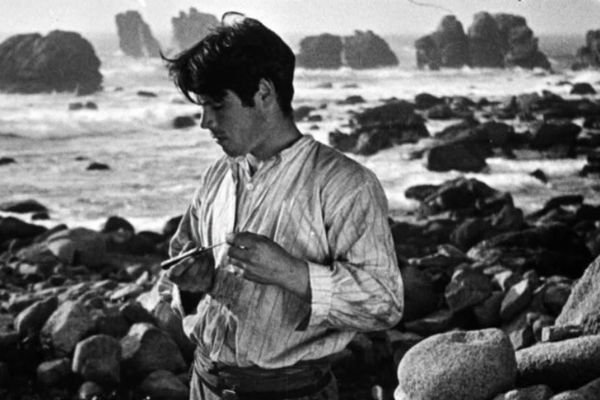
Can cinema tell us more than words? Can ocean waves, the wind, a close-up of a human face, or the unusually slow passage of time become the protagonists of a story? Today, the latest screening hosted by the "Cine-Club" at the National Library of Armenia offered exactly this kind of cinema. On screen was the silent film “The End of the World” (Finis Terrae, 1929) by Jean Epstein, a pioneer of French Impressionist cinema.
The film’s action unfolds on a remote island off the coast of Brittany, where four fishermen gather seaweed. The illness of one of them transforms their ordinary daily routine into a struggle for survival. Yet, it is not merely the story that interests Epstein. Before his camera, the sea becomes a character, nature an integral participant in human destiny, and time at times stretches out, conveying the inner experiences of the protagonists. Interestingly, many of the people who appear in the film are not professional actors. Epstein involved residents and fishermen in the production, merging real life with the art of cinema into a single work. The filming took place in the authentic island setting of Brittany, where the unpredictability of nature and the daily lives of the inhabitants became part of the film’s artistic language.
The film’s Latin title, “Finis Terrae”, means "the end of the earth." And this is not merely a geographical reference; in Epstein’s cinema, the "end of the earth" also serves as a boundary—between humanity and nature, reality and imagination, life and death. With its bold visual solutions for its time—unusually large close-ups, slow-motion imagery, and rhythmic editing—this film stands as a work of silent cinema that serves as a reminder: cinema is, first and foremost, the art of thinking in images. When there is silence on the screen, that is often when cinema speaks the loudest.
 English